Test Bacteria in Cooling Water Systems
Cooling Towers are under constant attack by biological fouling. This leads to corrosion,
which in turn affects operational efficiency. Industrial cooling water systems are ideal
incubators for promoting the growth and proliferation of microorganisms as the
temperature, pH, organic, and inorganic salts, sunlight, and plenty of oxygen in the
cooling systems provide a favorable environment. Biological fouling in cooling water
systems is caused by Algae, Fungi, and Bacteria.
Sixty to seventy percent of the bacteria living in recirculating cooling water systems
belong to two genera of Pseudomonas and Aerobacter. These are mostly aerobic species
living in an oxygen environment. The other very dangerous species are the Sulphate
sulfate-reducing bacteria (SRB) which are anaerobic. These are generally found in the
recesses of the basin of the system, where recirculation is less and the environment is
devoid of oxygen. These organisms cause the pitting type of corrosion. The limits
generally followed for recirculating cooling waters are – TBC/ml: 105/ml, Pseudomonas:
104/ml, SRB: 103/100ml.
The most practical and efficient method to control microbes in cooling water is through
the usage of biocides; both oxidizing and non-oxidizing. But before control, the most
important step is the detection of the harmful bacteria, for the following points:
Estimation of the extent of contamination
Selection of the right biocide, the optimum dosage, and the required frequency of
dosage.
Regular detection helps to achieve optimum use of the biocide and thereby reduce
corrosion, improve efficiency, and most important of all, avoid breakdowns. Excess or
insufficient usage of the biocide can lead to microorganisms developing resistance
towards the biocide, especially the non-oxidizing ones. Detection and estimation, of
microorganisms are done by conventional techniques like The Plate Count, Most Probable
Number, and the Membrane Filter Technique. All these techniques require a well-equipped
laboratory, with trained microbiologists, and are tedious, time-consuming, and
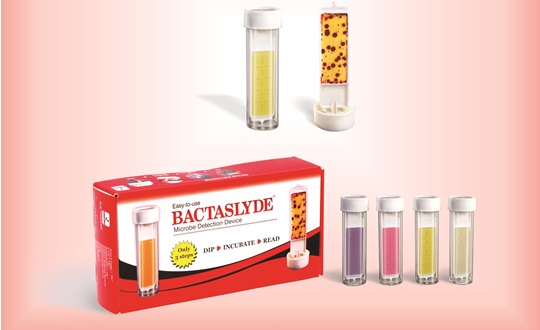
expensive. Now you have an alternate to all this BACTASLYDE